The "Dasy Spotter Program" was created in collaboration with the Barnstable Clean Water Coalition in order to track the spread of the invasive marine macroalgae Dasysiphonia japonica along the Northeastern United States coastline.

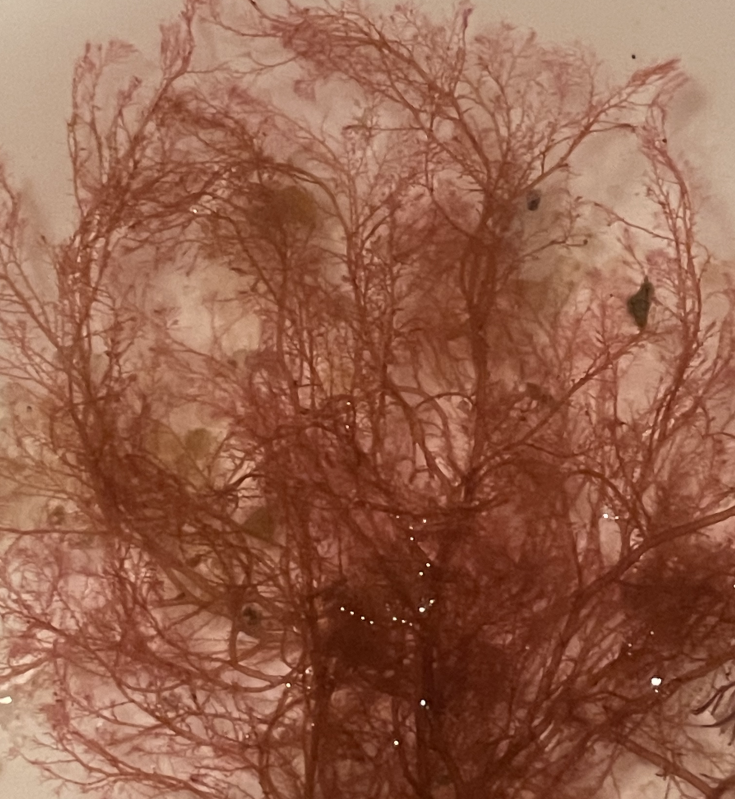
"Dasy" is the nickname we have given to Dasysiphonia japonica is an invasive red seaweed that has fouled up beaches from Hyannisport to Falmouth for the past several years. Native to Japan, this seaweed has spread around the world likely via ship ballast water. It was first spotted outside of its native habitat in northern Europe in 1994 and is believed to have arrived to the east coast of the USA in the mid-2000's. Historically, this species has clogged up beaches in Long Island, been in high abundance in Narragansett Bay, and is being studied by currently in the Gulf of Maine. "Dasy" was spotted in Martha's Vineyard in the early 2010's and has been spreading along coastal Nantucket Sound.
For the first part of its life, Dasy is attached to the course sediment, rocks, and shells found in shallow coastal waters. After it gets too big, it breaks off the bottom and begins to drift and continues to survive as a free-floating organism. Depending on local water conditions and nutrient availibility, it has the ability to rapidly reproduce via fragmentation (breaking into pieces) and spore production.

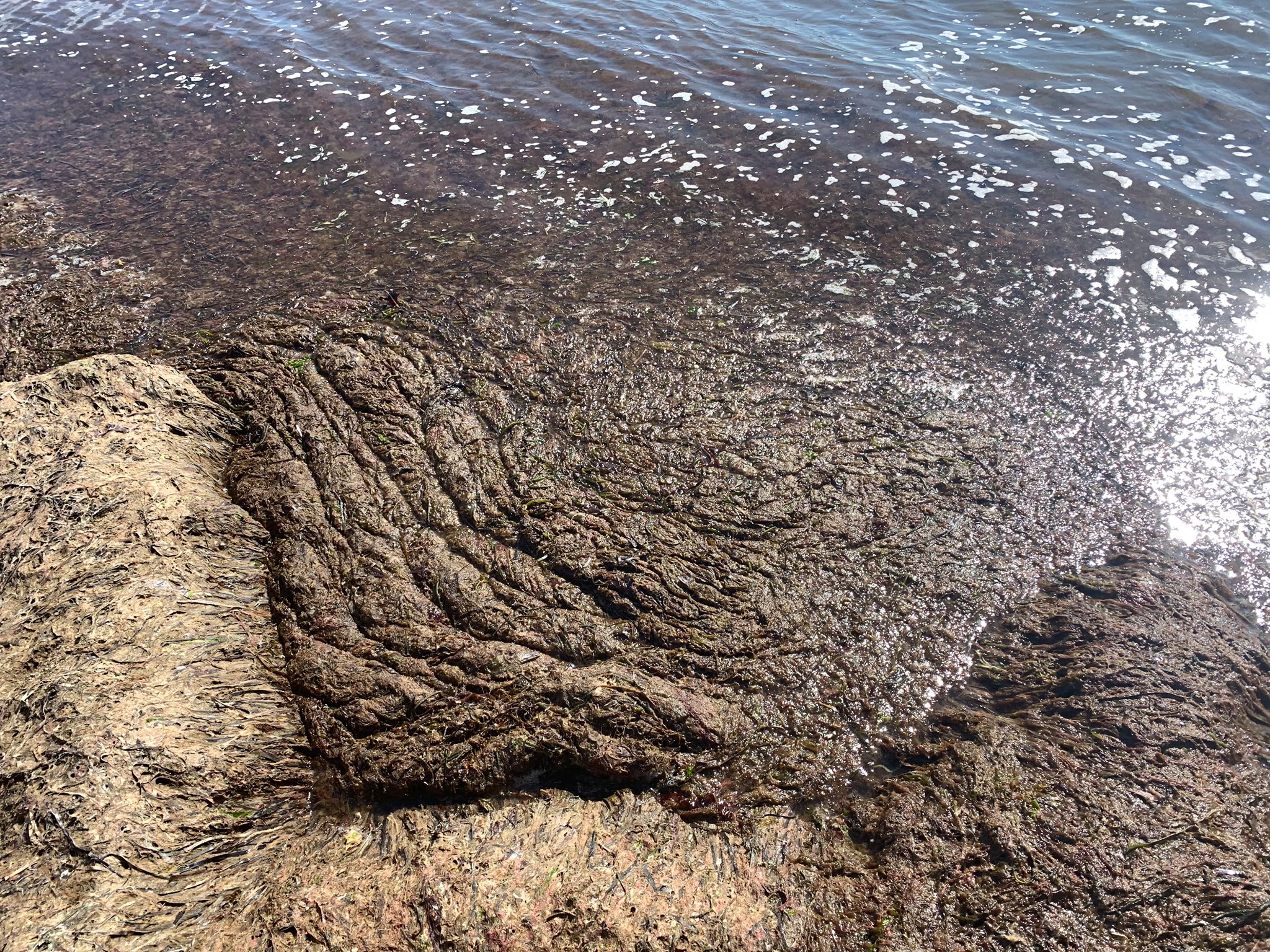
Large drifts and accumulations of Dasy have environmental implications, including smothering the seafloor and impacting bottom dwelling life, dragging seaweed-entangled horseshoe crabs to shore during mating season, lowering oxygen concentraitons in the water during decomposition events, and outcompeting native, more beneficial seaweed species which impacts local fisheries. Mats of seaweed can also be a host for harmful bacteria, impacting water quality at swimming beaches.
© 2024 Popponesset Water Stewardship Alliance. All rights reserved.